The problem — and how we answer it.
The conditions came first. The formulations followed. This is what that meant in practice.
What Indian baby skin actually faces
A baby’s skin is the same everywhere. What differs is what it is asked to cope with. Four things shaped every specification we wrote — and each one is a mechanism, not a mood.
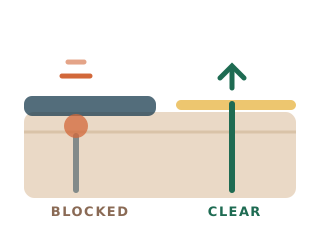
Heat, and blocked sweat
Prickly heat is a sweat duct that cannot drain. It is the most common sweat-induced skin complaint in tropical India, and a heavy occlusive layer is what turns a hot afternoon into one.[3]
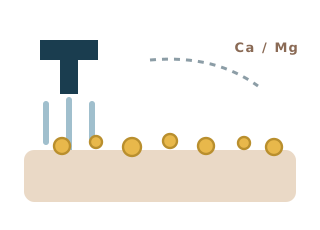
Water that leaves something behind
Water hardness varies by source and location. Hardness refers specifically to dissolved calcium and magnesium, which changes how a cleanser lathers and rinses [4] — and the residue is what leaves skin feeling tight after a bath.
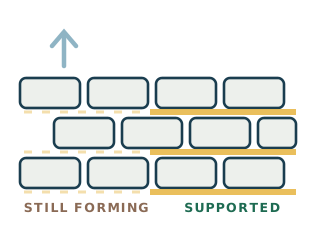
A barrier still being built
Around 18% of Indian parents report skin that feels dry or reacts easily in children under five.[1] Infant skin also loses water faster than adult skin, because the lipid mortar between the cells is not finished yet.[5]
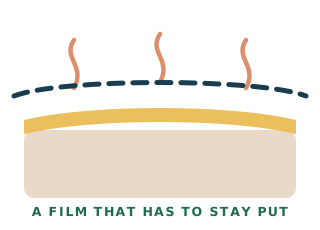
Warm, enclosed, four hours at a time
Nappy rash is reported in 4–35% of children up to age two.[2] Warmth, moisture and friction inside a nappy are what make it likely — and a barrier that spreads easily has usually been thinned.
When skincare is not the answer
Eczema, fungal infection, persistent or spreading nappy dermatitis, severe cradle cap, and broken, weeping or painful skin all require medical evaluation. Tenderma products are cosmetics and are not intended to diagnose or treat these conditions. If any of these describe your baby, start with your paediatrician.
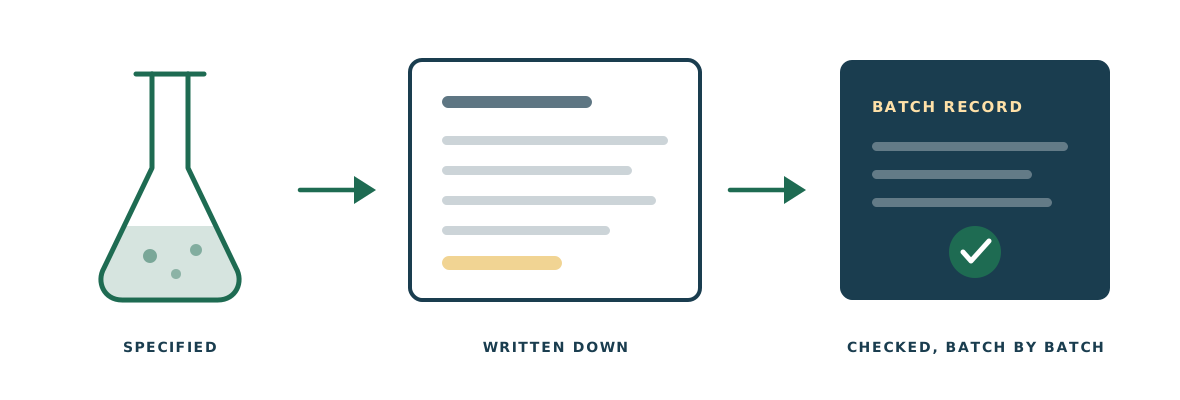
Our answer: formulate for the conditions, not despite them.
This is what it means in practice: not an Indian ingredient added to a general formula, but Indian conditions written into the formulation specification from the beginning — texture, cleansing system, concentrations, formats and routine guidance.
The wash uses a mild sulfate-free surfactant system with a chelating agent, selected to bind common water minerals and support clean rinsing. That choice was made specifically with mineral-heavy Indian water supplies in mind.
Specified for a light, non-greasy finish in warm, humid weather. A five-ceramide complex (EOP, NS, NP, AS, AP) with cholesterol is included for barrier support, alongside Aquaxyl, whose supplier studies describe support for the skin’s own hydration pathways.
We specify the botanical species, plant part, extraction method and marker requirements for our key Ayurvedic ingredients. Ingredient-level evidence; finished-formulation testing is a separate step.
Zinc oxide at a declared 12–15% forms a physical layer that helps protect the nappy area from moisture and friction, with standardised Neem extract included for its long traditional use in nappy-area preparations.
Two disciplines, and what each one has to prove.
Both halves of our tagline get used loosely across the category. These are the specific commitments behind ours. Tap any line to open it.
What “dermatology-led” means here
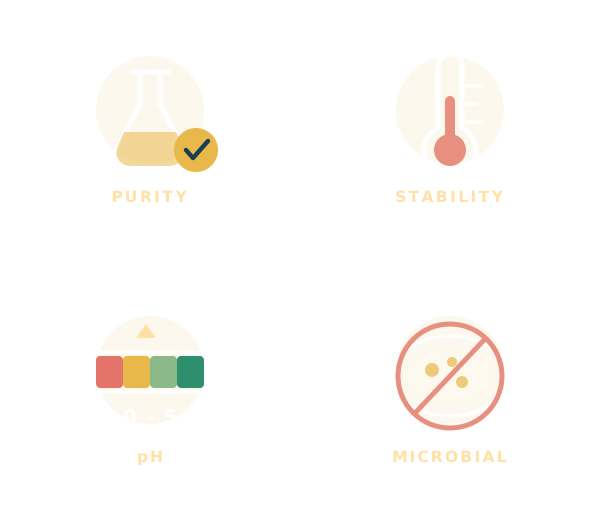
Five things that happen before, during and after a formulation is made.
01A written specification before any sample
Concentrations, pH targets, excluded ingredients and the preservative system are fixed in writing before anything is manufactured. The specification is the floor a batch has to meet, not an opening position.
02Nothing changes without a written review
Any departure from the specification has to be raised, justified and approved in writing before it can go into a batch — whether it is an ingredient, a concentration or a supplier. Nothing changes silently.
03Paediatric dermatologist review
A practising paediatric dermatologist reviews the complete formulations — the full ingredient set, not a shortlist — along with the guidance we publish on this site.
04Stability testing, including in-use
Beyond standard accelerated stability, jars are assessed for in-use contamination as well as sealed-sample stability — because repeated finger-dipping in Indian humidity is a different test entirely.
05Every reaction logged against its batch
Every reported reaction is recorded against both the product and its manufacturing batch, and reviewed as a rate per thousand units sold rather than a raw count. A raw count grows with sales; a rate shows a real pattern early.
What “enriched by Ayurveda” means here
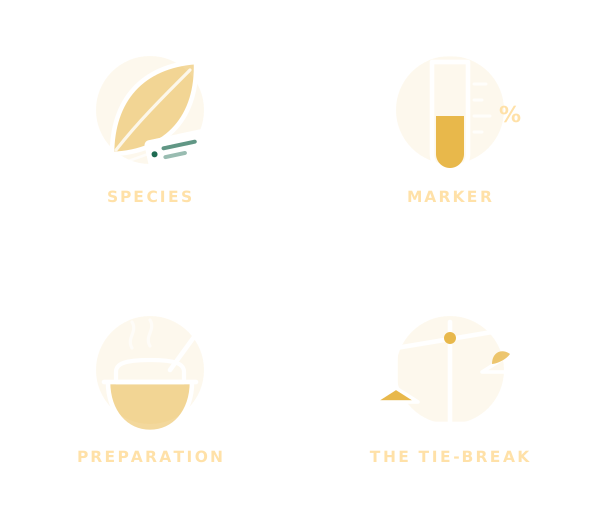
Four things a botanical has to prove before it goes into a batch.
01Species, not common name
One common name can cover more than one plant, and the two are not interchangeable on skin. Every Ayurvedic ingredient is specified by its botanical species, so what goes into the batch is the plant that was intended.
02Standardised to a marker compound
An extract without a declared percentage of its active compound tells you nothing about dose. So we specify the species, the plant part, the extraction method and a marker level — azadirachtin for neem, glabridin for liquorice, faradiol for calendula.
03Classical preparations, kept intact
Where a classical Ayurvedic preparation earns its place, it goes in as the preparation — not as a pinch of extract added so a familiar name can appear on the label. Our massage oil carries Balaaswaganthadi Thylam on that basis.
04Where the two disagree, dermatology wins
Daily oil massage is deeply established here, but on a heavy, occlusive base in peak summer it can block sweat ducts. The base is chosen to absorb rather than sit, and the routine says plainly when daily massage is worth reconsidering. Tradition earns its place by working, not by being old.
What we are not claiming
- These are cosmetics, not medicines. They support the skin barrier. They do not treat eczema, infection or any diagnosed condition.
- Nothing here is hypoallergenic. No formulation can be. Any ingredient can cause a reaction in the right child, which is why we run a batch-traced reporting system rather than promising it will not happen.
- “Dermatology-led” describes our formulation and review process. It is not a regulated term and it does not mean a dermatologist has seen your baby.
- If your baby’s skin is broken, weeping, spreading or accompanied by fever, no skincare product is the answer. That is a paediatrician, today.
Every reference behind these pages, listed in full with journal, year and link — including the handful that argue against something we do. Where a claim rests on a supplier’s own study rather than published literature, the entry says so.

If we have written something here wrongly, tell us at care@tenderma-india.com — we would rather correct it than defend it.